Good News | Associate Professor Zhang Dongjing from Our Institute Selected as a Typical Case of Guangdong International Voluntary Service
Recently, in the "Yue Zhi Si Hai" Guangdong International Voluntary Service typical case collection and series promotion campaign jointly organized by the Provincial Committee's Social Work Department and media outlets such as Southern Daily and the Southern+ client, the project submitted by Associate Professor Zhang Dongjing from our institute—"Zhongshan School of Medicine: From the Laboratory to the 'Belt and Road,' Innovative Practices of China's SIT Technology in Safeguarding Global Community Health"—was recognized as a typical case of "Yue Zhi Si Hai" Guangdong International Voluntary Service. A total of five units from our university received this honor.

Zhongshan School of Medicine: From the Laboratory to the 'Belt and Road,' Innovative Practices of China's SIT Technology in Safeguarding Global Community Health
Vector-borne diseases pose a significant public health threat to global human health, with vector control being a key measure for preventing such diseases. The team led by Associate Professor Zhang Dongjing from the Zhongshan School of Medicine at Sun Yat-sen University has long focused on the research and development of the Sterile Insect Technique (SIT) in mosquito vector control, achieving multiple breakthrough results. Related research has been published in prestigious journals such as Nature and Nature Communications and was selected as one of China's Top Ten Advances in Life Sciences in 2019. In key technical areas such as large-scale mosquito production, sex separation, and irradiation sterilization, the team has obtained 7 patents and led the formulation of 2 group standards.
On March 31, 2020, Sun Yat-sen University established the National Atomic Energy Agency R&D Center for Nuclear Technology (Insect Sterility). The center is composed of the Vector Prevention and Control Team from the Department of Pathogen Biology and Biosafety at the Zhongshan School of Medicine, the Sino-French Institute of Nuclear Engineering and Technology, and the Sun Yat-sen University Industrial Group (a wholly state-owned limited liability company). It aims to advance SIT for mosquito control, focusing on five key areas: technological innovation capacity building for vector control, sterile mosquito production bases (Sun Yat-sen University's "Mosquito Factory"), nuclear technology application expansion bases, international training and exchange bases, and talent cultivation and discipline development bases. Associate Professor Zhang Dongjing from the Zhongshan School of Medicine, serving as the Technical Director of Sun Yat-sen University's "Mosquito Factory" and the Director of the International Atomic Energy Agency (IAEA) Collaborating Centre on SIT (2025-2029), has led the team in making a series of beneficial attempts in overseas assistance.
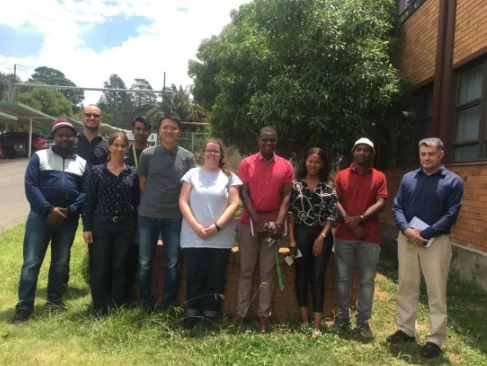
At the level of technology promotion and international collaboration, relying on the "Yue Zhi Si Hai" voluntary service framework, Zhang Dongjing has been deeply involved in building overseas capacity for mosquito vector control. From 2016 to 2025, he conducted on-site training in countries and regions including Réunion Island (France), Thailand, South Africa, Mexico, Malaysia, and Singapore, cumulatively covering over 100 trainees from more than 20 countries. Taking assistance to Mexico as an example, he not only provided comprehensive SIT technical training to local researchers (covering large-scale mosquito production, irradiation sterilization, etc.) but also participated on-site in large-scale production demonstrations, assisted in establishing a scientific irradiation system, and promoted and participated in the first field release (January 15, 2019). After the application of this technology, the local mosquito population in the release area decreased significantly by 50-75.2%, providing practical support for Mexico's mosquito-borne disease prevention and control. This technical assistance is a vivid example of Guangdong's contribution to the "Belt and Road" Initiative. Addressing the pressing issue of high incidence of mosquito-borne diseases in tropical regions along the route, Guangdong has exported mature technologies and nurtured local prevention and control capacities to build a robust defense barrier. This initiative not only strengthens international public health cooperation but also demonstrates Guangdong's responsibility and commitment to serving national strategies and contributing to global health governance. The international voluntary service of Associate Professor Zhang Dongjing's team transcends mere technical output, forming a replicable "Sun Yat-sen University Model":
Capacity Building Centered on "Teaching How to Fish": The voluntary service is not a one-time equipment donation or simple operational demonstration but focuses on fostering the local capacity for self-sustainability. Through systematic training, joint experiments, and collaborative releases, the team helps partner countries establish localized SIT technical teams and continuous operational capabilities.
Close Integration of "Industry, Academia, Research, and Application": The team translates cutting-edge research findings into applicable solutions and directly applies them in field practice through voluntary service, forming a complete closed loop from the source of innovation to on-the-ground implementation.
Precise Alignment with the "Belt and Road" Needs: The team keenly addresses the common public health challenge faced by tropical countries along the "Belt and Road"—mosquito-borne diseases—responding to their urgent needs with China's mature and green technical solutions. This achieves win-win cooperation and deepens the connotation of the "Health Silk Road."
Building an International Cooperation Network: By training participants from various countries, the team effectively constructs a cooperation network centered on SIT technology, connecting research institutions and public health departments worldwide. This facilitates ongoing technical exchange, data sharing, and joint research efforts in the future.